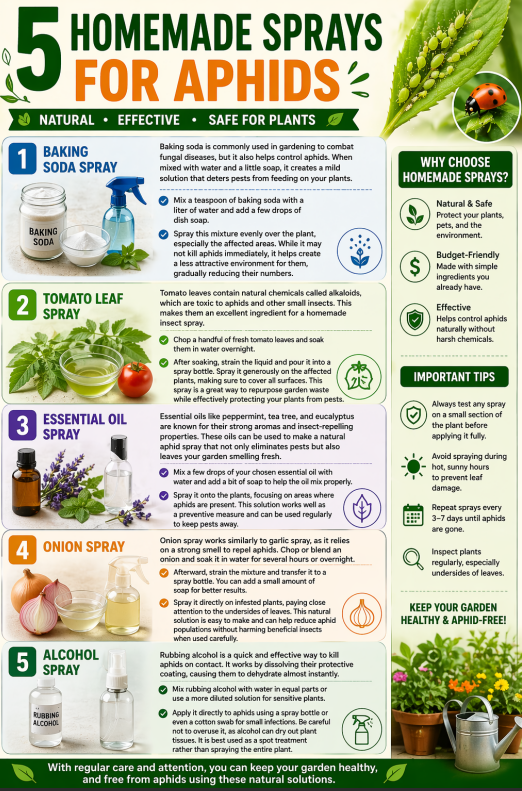
Homemade sprays for aphids are a simple and effective way to deal with aphids without relying on harsh chemicals. Each method has its own strengths, and you may need to try a few to find what works best for your plants. These are 5 homemade sprays for aphids you should try for your garden.
Always test any spray on a small section of the plant before applying it fully, and avoid spraying during hot, sunny hours to prevent leaf damage. With regular care and attention, you can keep your garden healthy, and free from aphids using these natural solutions
1. Baking Soda Spray
Baking soda is commonly used in gardening to combat fungal diseases, but it also helps control aphids. When mixed with water and a little soap, it creates a mild solution that deters pests from feeding on your plants. Mix a teaspoon of baking soda with a liter of water and add a few drops of dish soap.
Spray this mixture evenly over the plant, especially the affected areas. While it may not kill aphids immediately, it helps create a less attractive environment for them, gradually reducing their numbers.
2. Tomato Leaf Spray
Tomato leaves contain natural chemicals called alkaloids, which are toxic to aphids and other small insects. This makes them an excellent ingredient for a homemade insect spray. To make it, chop a handful of fresh tomato leaves and soak them in water overnight.
After soaking, strain the liquid and pour it into a spray bottle. Spray it generously on the affected plants, making sure to cover all surfaces. This spray is a great way to repurpose garden waste while effectively protecting your plants from pests.
3. Essential Oil Spray
Essential oils like peppermint, tea tree, and eucalyptus are known for their strong aromas and insect-repelling properties. These oils can be used to make a natural aphid spray that not only eliminates pests but also leaves your garden smelling fresh.
Mix a few drops of f your chosen essential oil with water and add a bit of soap to help the oil mix properly. Spray it onto the plants, focusing on areas where aphids are present. This solution works well as a preventive measure and can be used regularly to keep pests away.
4. Onion spray
Onion spray works similarly to garlic spray, as it relies on a strong smell to repel aphids. Chop or blend an onion and soak it in water for several hours or overnight. Afterward, strain the mixture and transfer it to a spray bottle. You can add a small amount of soap for better results.
Spray it directly on infested plants, paying close attention to the undersides of leaves. This natural solution is easy to make and can help reduce aphid populations without harming beneficial insects when used carefully.
5. Alcohol spray
Rubbing alcohol is a quick and effective way to kill aphids on contact. It works by dissolving their protective coating, causing them to dehydrate almost instantly.
To make this spray, mix rubbing alcohol with water in equal parts or use a more diluted solution for sensitive plants. Apply it directly to aphids using a spray bottle or even a cotton swab for small infections. Be careful not to overuse it, as alcohol can dry out plant tissues. It is best used as a spot treatment rather than spraying the entire plant.